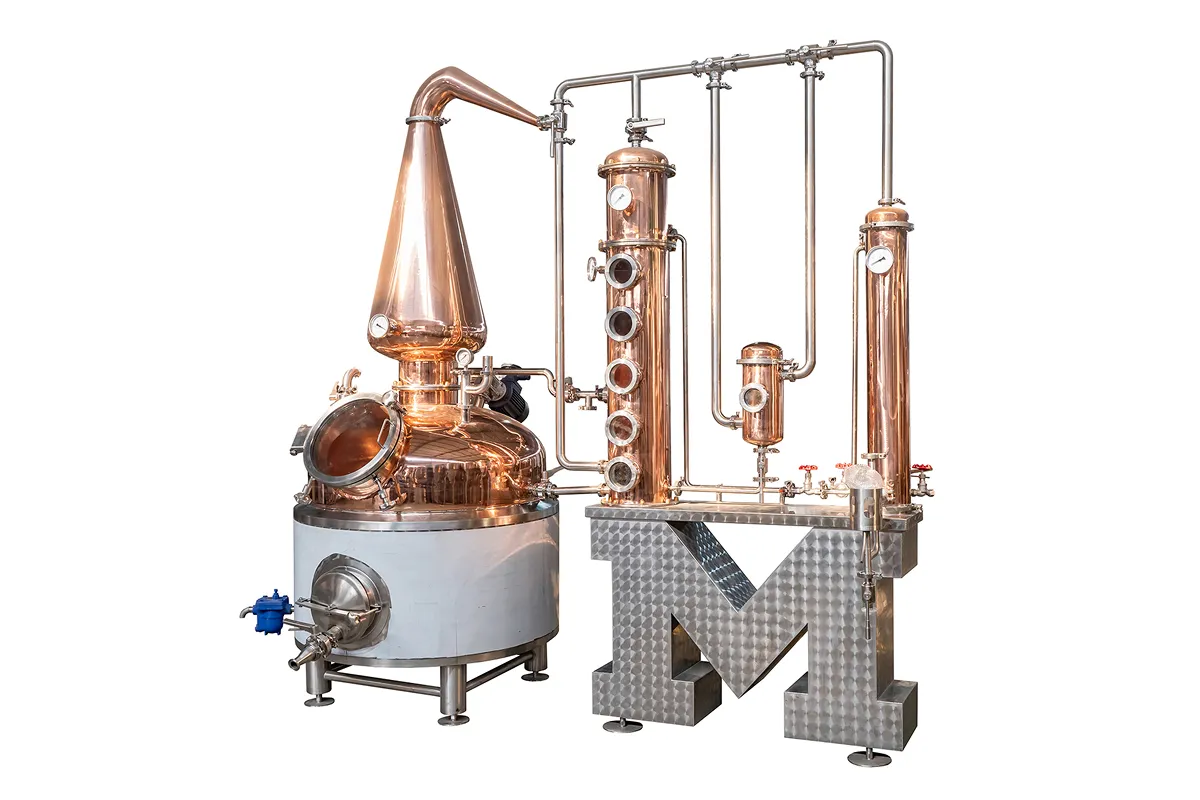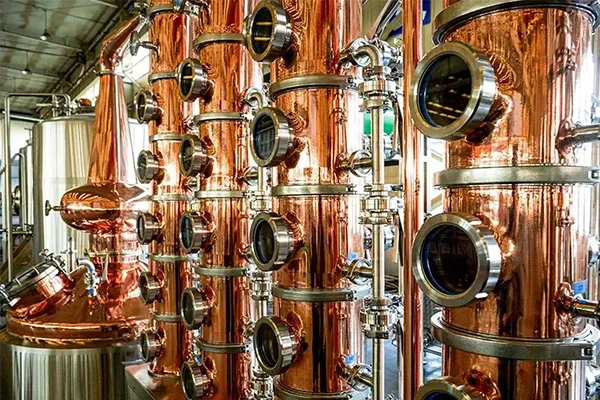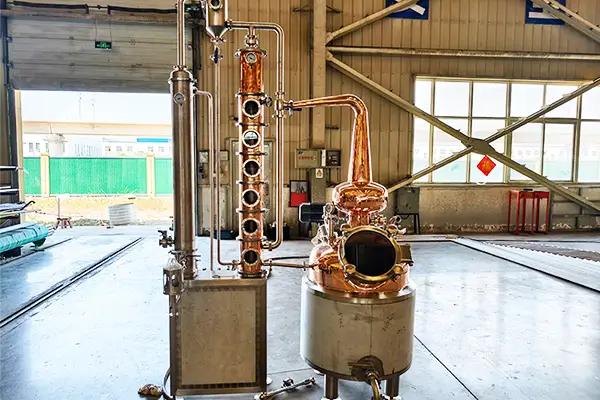



Custom column stills engineered for high-purity alcohol and commercial spirit production. Designed for efficient separation, scalable output, and precise control from pilot systems to industrial installations.


A column still uses a vertical series of separation stages to repeatedly condense and revaporize alcohol vapor. Bubble-cap, sieve, or valve trays create controlled contact between rising vapor and descending liquid, producing cleaner separation than a simple pot still.
Column systems may operate in batch rectification or continuous production. A Coffey still is one type of continuous column still; the correct configuration depends on feedstock, target spirit, proof, throughput, and the amount of flavor the distiller wants to retain.
Wash is charged into a kettle or introduced at an engineered feed stage. Steam or electric heat generates alcohol-rich vapor.
Vapor rises through the trays while liquid moves downward. Each plate acts as another separation stage.
The dephlegmator returns part of the condensate to the column, sharpening separation and stabilizing proof.
Selected vapor moves to the product condenser, where it is cooled and collected at the required takeoff rate.
Every system is built to order. Final column diameter, height, plate type, plate count, reflux control, heating load, condenser duty, and automation level are confirmed during engineering.
For process development, recipe trials, training, and small commercial runs. Electric heating is available where site steam is not practical.
A flexible batch rectification system for vodka, gin base, light rum, and multi-product craft distilleries. Plate count and reflux control are selected by product target.
Steam-heated systems designed for higher daily output, repeatable proof, easier operator control, and integration with fermentation, CIP, and spirit storage.
Multi-plate configuration for clean vodka and neutral spirit. With suitable feed and operating conditions, the system can approach the ethanol-water azeotropic range.
Copper trays, packing, or column sections provide sulfur reduction where a cleaner spirit is required without removing all of the raw material character.
Engineered for continuous feed, steady-state separation, higher throughput, heat integration, automated controls, and commercial-scale alcohol production.
Purity is not determined by the equipment name alone. The result comes from the complete process: feed composition, column design, plate efficiency, reflux ratio, heat input, and takeoff rate.
High reflux and sufficient rectification stages create a clean, consistent high-proof spirit with minimal congeners.
Designed for precise fractionation and near-azeotropic alcohol production when feed quality and operating conditions allow.
Produces a clean neutral base before botanical redistillation, helping the final gin express the botanical recipe clearly.
Moderate-to-high rectification produces a lighter rum profile while adjustable reflux preserves the desired cane or molasses character.
Column configurations can produce lighter grain spirit continuously or in batch, depending on the required regional style and proof.
Continuous systems support stable high-purity output for licensed commercial and industrial alcohol applications.
Column stills are selected when the production target requires tighter separation, higher proof, greater throughput, or more repeatable operation than a simple pot-still process can provide.
Multi-stage rectification can produce high-proof spirit up to approximately 96% ABV, depending on feed, plate count, reflux, and operating conditions.
Column systems can process more alcohol per operating period than repeated pot-still runs when the installation is correctly sized.
Controlled heat, reflux, pressure, and takeoff settings help operators reproduce the same proof and separation profile between runs.
Reflux ratio, active plate count, and takeoff point can be engineered to balance purity with the flavor compounds required by the spirit style.
Proper condenser sizing, insulation, steam control, and optional heat recovery reduce utility demand per liter of finished spirit.
CIP spray devices, accessible sight glasses, sanitary piping, and PLC options simplify cleaning, inspection, and daily operation.
A useful quotation starts with the spirit target and production duty. Capacity alone is not enough to size a rectification system correctly.
Production goal
Recommended approach
Primary engineering focus
Vodka / neutral spirit
High-reflux rectification
Plate efficiency, reflux control, clean feed, stable takeoff
Gin base
Clean neutral base production
Purity before botanical redistillation and easy CIP
Light rum
Moderate rectification
Balance throughput and proof with retained cane or molasses character
Grain whiskey
Batch or continuous column
Regional style, congeners, proof target, and production volume
Industrial alcohol
Continuous rectification system
Steady feed, heat integration, automation, and compliance
Scale
Nominal capacity
Heating
Typical control level
Pilot
100L-300L
Electric or steam
Manual or semi-automatic
Craft
500L-1000L
Steam recommended
Semi-automatic or PLC
Commercial
1500L-3000L
Steam
PLC with process monitoring
Industrial
5000L+
Steam / reboiler
Engineered continuous automation
Engineering note: the final specification is confirmed from feedstock, target ABV, annual output, operating hours, available utilities, ceiling height, local pressure-vessel requirements, and required automation.
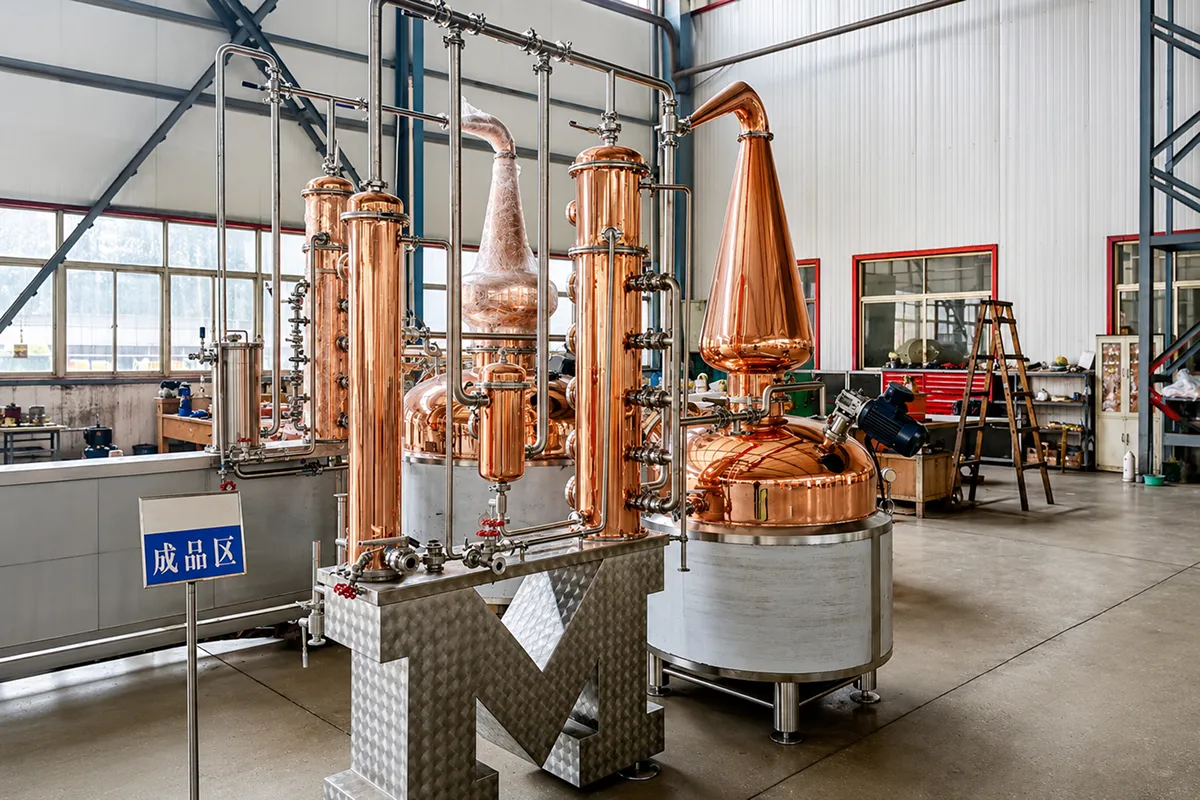
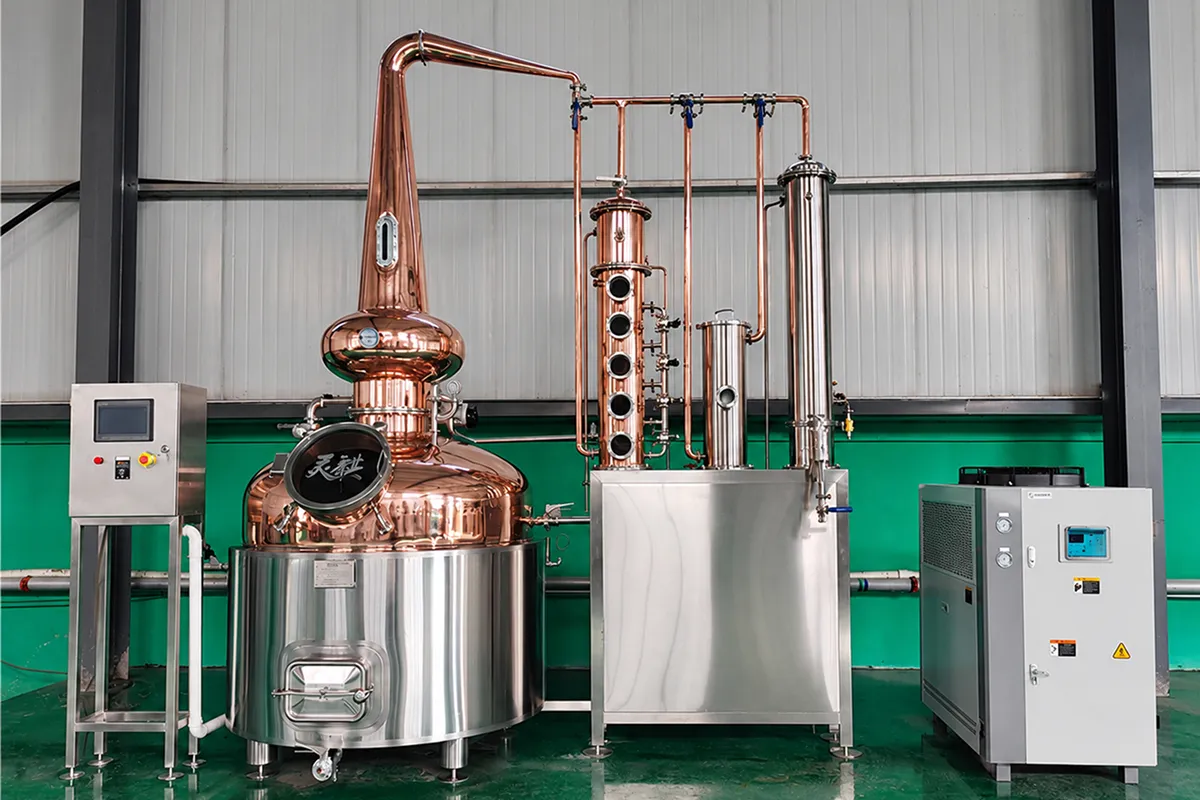
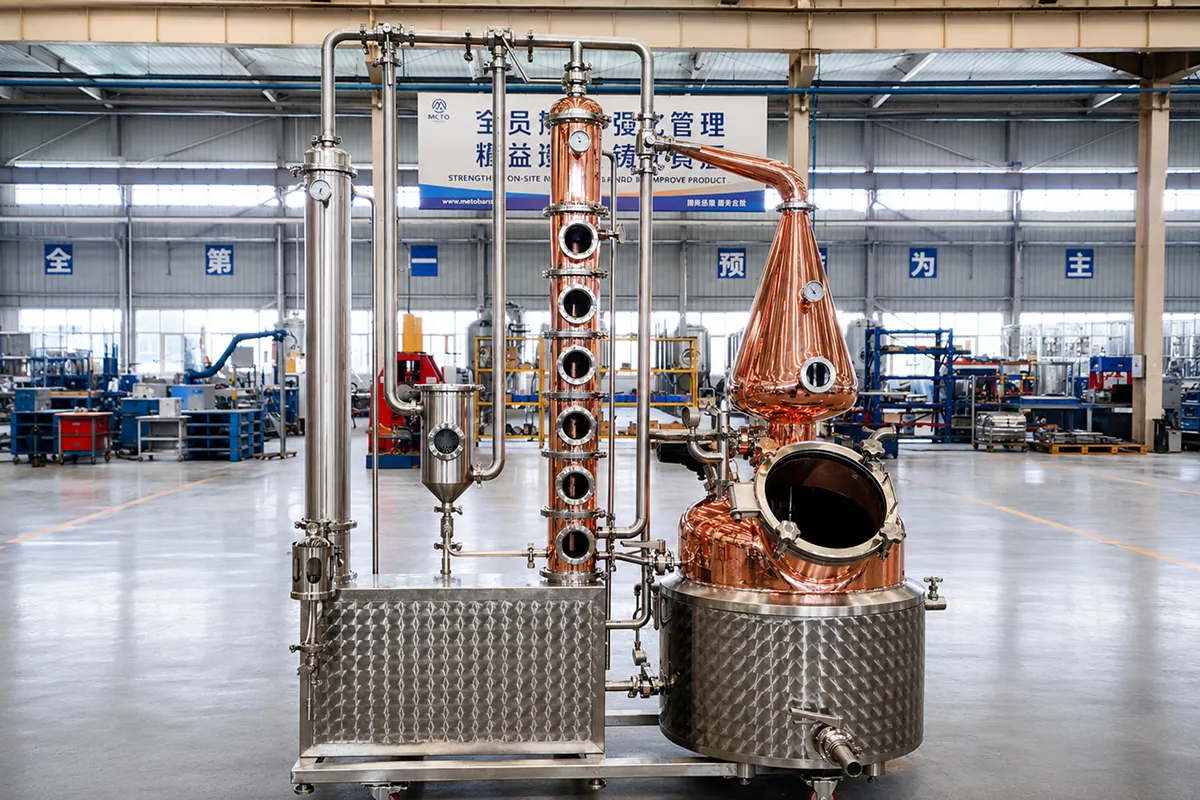
These factory images show representative column distillation systems. Vessel geometry, plate count, condenser arrangement, controls, and external finish are customized for each project.
Copper contact surfaces, multi-plate rectification, condenser, product piping, and compact skid arrangement.
Pre-assembled piping and vessels allow inspection, factory testing, and faster site installation.
Integrated control panel and utility package support repeatable operation and monitored process settings.
Material selection can combine sanitary stainless fabrication with copper where vapor contact is required.
These answers define the main decisions before detailed process calculations and fabrication drawings begin.
A pot still normally performs one batch separation at a time and is commonly selected for flavor-rich spirits. A column still provides multiple separation stages in one vertical system, allowing higher proof, tighter fractionation, and potentially continuous operation.
No. Column stills can be batch rectification systems or continuous systems. A Coffey still is a particular continuous column design. The correct mode depends on feedstock, production volume, spirit style, and required proof.
With sufficient stages, suitable feed, and controlled reflux, a rectification column can approach approximately 96% ABV, the ethanol-water azeotropic range at normal pressure. Actual output depends on the complete process design and operating conditions.
Bubble-cap plates provide a broad operating range and visible liquid action, making them common in craft systems. Sieve plates are simpler and can suit stable higher-throughput duties. Plate selection is confirmed from turndown, cleaning, pressure drop, and product goals.
Stainless steel provides durability and sanitary cleaning. Copper is used where sulfur reduction or copper vapor contact is important. Many commercial systems combine stainless vessels and piping with copper trays, packing, or column sections.
Electric heating can suit smaller pilot and craft systems. Steam jackets or reboilers are generally preferred as capacity increases because they provide faster, more controllable heat transfer. Final utility sizing is confirmed during engineering.
Yes. Options include CIP spray devices, sanitary circulation paths, automated steam and cooling-water control, reflux control, temperature and pressure monitoring, recipe management, alarms, and remote diagnostics.
Provide the feedstock, target products, required output ABV, annual volume, operating schedule, available steam or electrical power, cooling-water conditions, ceiling height, installation country, and preferred automation level.
Send us your feedstock, target spirit, required proof, annual output, utilities, and site height. We will prepare a recommended process configuration and quotation.
Our team will reply using the contact details you provide. Please check your inbox and spam folder for our response.
*We respect your privacy. All information submitted is strictly confidential.
Your details will only be used to respond to your inquiry. We never send unsolicited emails or promotional messages.