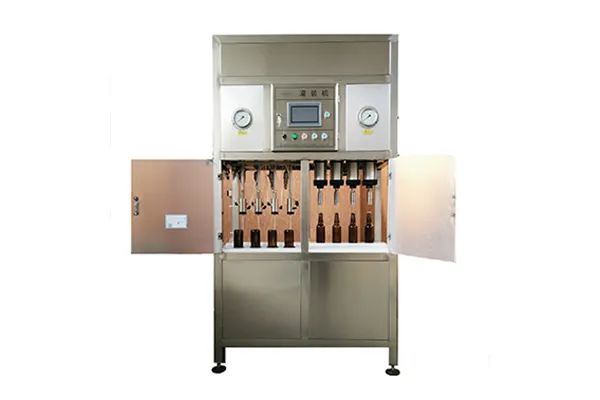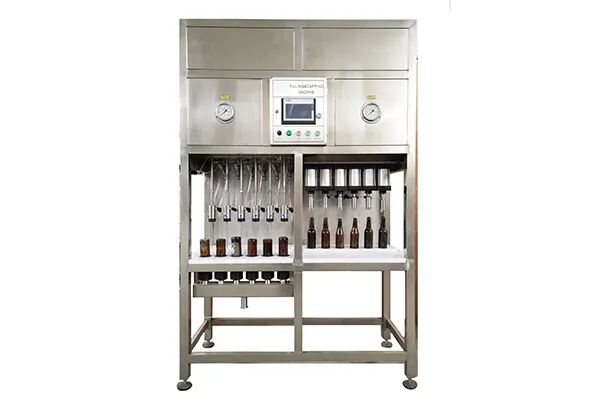



Designed for small-to-mid scale beer packaging projects that need more stable low-foam filling, controlled CO₂ back-pressure, and one-cycle filling plus capping in a compact semi-automatic layout.


Isobaric filling with CO₂ back-pressure
2 / 4 / 6 / 8 heads
150–600 bottles/hour
Bottle rinsing and screw capping
Instead of presenting this equipment as a simple bench-top filler, the page should make clear that its value comes from pressure control, repeatability, and reduced oxidation risk during beer filling.
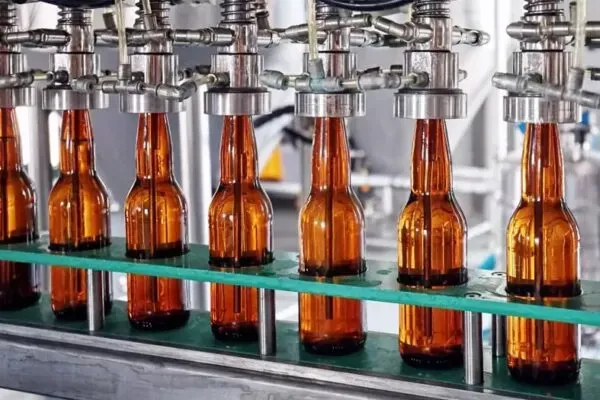
Uses pressure-equalized filling to improve liquid stability during packaging, which is especially useful for beer and other carbonated beverages.
Helps reduce oxygen exposure and control foam formation during filling.
Maintains a more stable internal pressure condition before and during filling.
Filling and capping are completed in one operating cycle to reduce unnecessary handling between steps.
2-head, 4-head, 6-head, and 8-head versions are available to match different production scales.
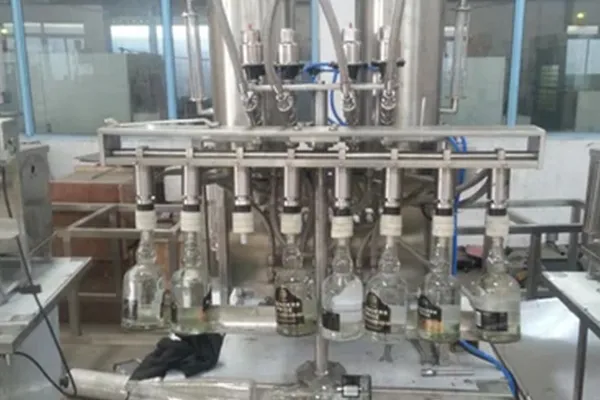
Filling heads can be customized according to bottle type, helping the machine adapt better to the selected package format.
Bottle rinsing and screw capping can be added when the project requires a broader semi-automatic packaging sequence.
We can provide layout suggestions, utilities lists, and integration notes to reduce on-site commissioning time.
The available configurations mainly differ in head count and throughput. This makes it easier to match the machine to batch size, packaging rhythm, and expected daily bottle output without moving directly to a fully automatic bottling line.
| Workstations | Capacity | Equipment Dimensions | Equipment Weight |
|---|---|---|---|
| 2 Heads | 150 bottles/hour | 1.1 × 0.65 × 2.1 m | 110 kg |
| 4 Heads | 300 bottles/hour | 1.4 × 0.65 × 2.1 m | 140 kg |
| 6 Heads | 450 bottles/hour | 1.7 × 0.65 × 2.1 m | 200 kg |
| 8 Heads | 600 bottles/hour | 1.4 × 0.75 × 2.1 m | 240 kg |
| Power Supply | 200W, 220V 50Hz (customizable) | ||
For this type of machine, the filling sequence is part of the product value. It shows whether the equipment is built only for basic dosing or for controlled beer packaging with more attention to pressure balance and cap application.
Built for more stable filling performance and smoother packaging flow, this section highlights the core process design behind cleaner, more controlled semi-automatic beverage packaging.
The machine uses isobaric filling with an independent pressure-holding system and CO₂ back-pressure function. This configuration is better suited to beer packaging where oxygen pickup, foam control, and fill stability are more important than simple liquid transfer.
Filling and capping are completed in one sequence, helping reduce manual transfer between separate stations and supporting a more controlled semi-automatic packaging routine.
Because the filling heads can be customized according to bottle type, the machine is easier to align with specific package formats instead of forcing one standard head design across all products.
Standard power supply is 200W, 220V 50Hz, with customization available. This makes the machine easier to adapt to different export market electrical requirements.
Designed for flexible project needs, this section shows how optional functions and configuration choices help the machine match different package formats, output goals, and production plans.
Useful when the project needs a cleaner package preparation step before filling.
Suitable for projects using screw-cap formats rather than a single cap style.
The 2- to 8-head range gives more flexibility when matching machine size to current output and future packaging plans.
Before production, it is useful to confirm package type, bottle dimensions, target speed, cap style, and whether rinsing or added capping functions are required.
Explore other brewery equipment models by capacity to match different production goals and future expansion plans.
We’re not only a supplier—we support your brewery project from system configuration to commissioning and long-term operation. As a brewery equipment manufacturer, we focus on process compatibility, hygienic build quality, and scalable system design.
Configuration based on brewing workflows, not generic tank lists.
Layouts, utilities lists, and integration notes for your site.
Better cost control, faster response, clearer accountability.
Training, spare parts guidance, and expansion planning support.
Malt Handling → milling & transfer preparation
Brewhouse → mash/lautering + boil/whirlpool
Cooling & Transfer → heat exchange to fermentation temp
Fermentation → jacketed conical fermenters for stability
Conditioning (Optional) → BBT / maturation
CIP → clean-in-place hygiene standardization
Packaging (Future-ready) → keg/bottle/can integration
Choose a Semi-Automatic Can/Bottle Filler and Capper Combo layout that supports cleanability, stable fermentation temperature control, and planned expansion (more fermenters / BBT / packaging).
This machine is mainly suited to packaging projects that need better filling control than manual equipment but do not yet require a full automatic bottling line.
Key technical points for system confirmation and configuration clarity.
The main difference is output capacity. The 2-head version is rated at 150 bottles/hour, while the 8-head version reaches 600 bottles/hour. Larger head counts are more suitable when the project requires higher packaging throughput.
Yes. The machine uses isobaric filling with CO₂ back-pressure and an independent pressure-holding system, which makes it suitable for beer packaging where reduced oxidation and better foam control are important.
Yes. The data provided states that filling heads can be customized according to bottle type, which is important when the package format differs from a standard reference design.
Yes. Bottle rinsing and screw capping are listed as optional functions and can be included depending on the project requirement.
No. The standard specification is 200W, 220V 50Hz, and the voltage can be customized for different market requirements.
To recommend the right semi-automatic can/bottle filler and capper configuration, it is helpful to confirm the package type, head count target, expected hourly output, cap type, and whether bottle rinsing or screw capping is needed.
We can design the Semi-Automatic Can/Bottle Filler and Capper Combo to be packaging-ready (keg/bottle/can integration) to avoid future rework.
Fill in the essentials—our team will respond with a technical proposal.
Tip: Attach layout drawings and utilities list for faster engineering confirmation.
Our team will reply using the contact details you provide. Please check your inbox and spam folder for our response.
*We respect your privacy. All information submitted is strictly confidential.
Your details will only be used to respond to your inquiry. We never send unsolicited emails or promotional messages.