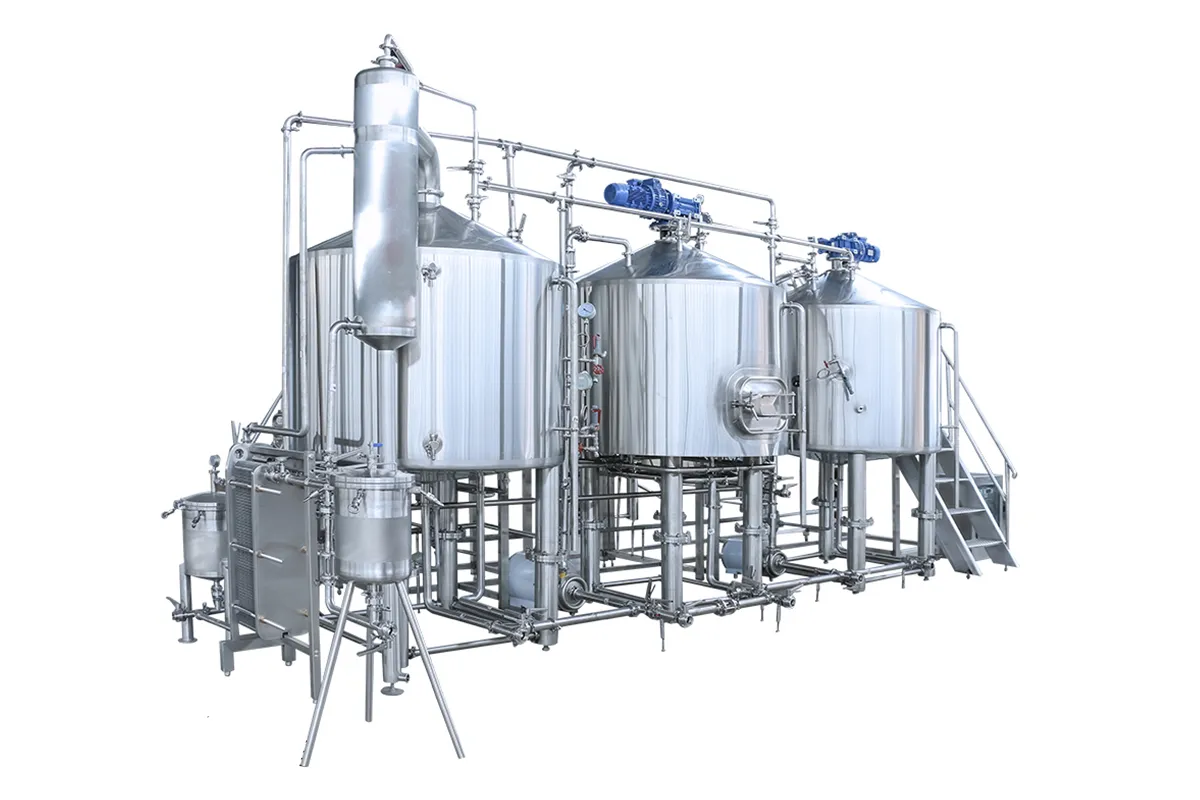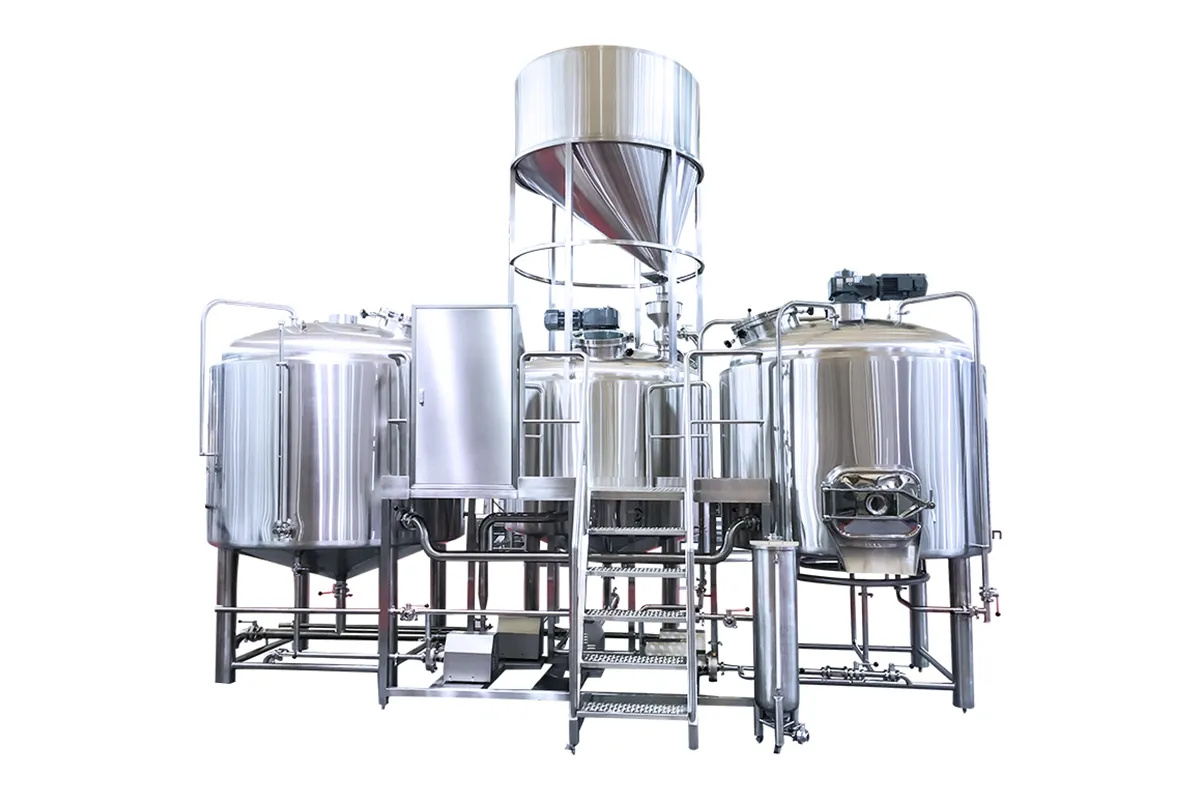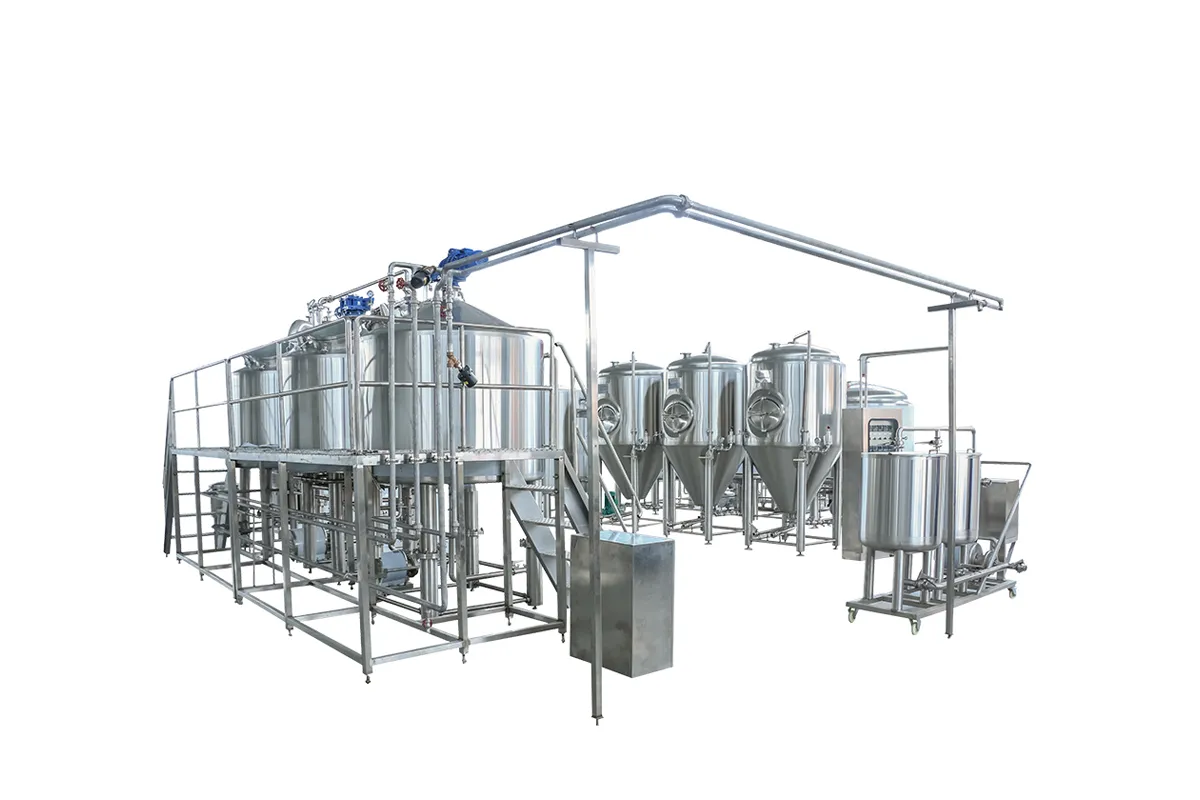


METO’s 1500L brewery equipment is a 15HL system for growing craft breweries moving from taproom-led sales toward regular regional distribution. A typical project combines a three-vessel brewhouse, larger hot liquor capacity, a matched fermentation cellar, industrial glycol cooling, CIP and configurable automation. The system is engineered around production rhythm, packaging demand and future tank expansion.


Procurement-friendly configuration designed as a connected brewing architecture—brewhouse throughput, fermentation capacity, cooling load, cleaning efficiency, and controls are matched to minimize commissioning risk and stabilize output.
Add-ons: BBT, more fermenters, PLC/HMI automation, packaging integration.
We can provide layout suggestions, utilities lists, and integration notes to reduce on-site commissioning time.
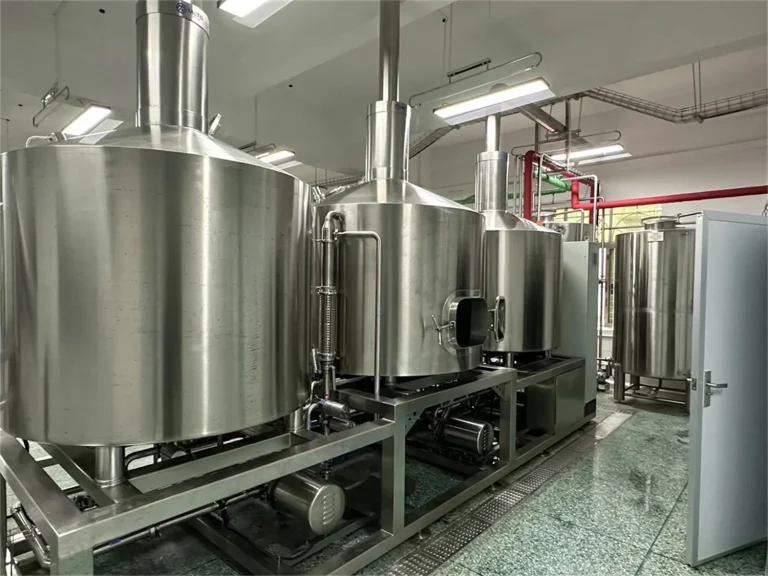
Commercial brewhouse designed for stable extraction, fast lautering, consistent boiling, and repeatable whirlpool separation. Built with sanitary TIG welding, polished internal surfaces, and steam jacket heating.
Hygienic construction, pressure-rated accessories, and stable glycol cooling help reduce batch variation and labor dependency in daily production.
For a 1500L brewery, fermentation capacity—not brewhouse size—often becomes the first production bottleneck. A practical fermenter plan ensures stable weekly output, avoids rushed tank turnover, and keeps your cooling and CIP systems properly sized.
Recommended fermenter volume ≈ Batch Size × Fermentation Days ÷ Brewing Interval (days)
Example: If you brew 1500L/day, and fermentation averages 14 days, you need about 21,000L effective fermentation volume.
| Brewing Pattern | Typical Fermentation Cycle | Suggested FV Qty (1000L) | Notes |
|---|---|---|---|
| 2 brews / week | 12–14 days | 4–6 | Good for taproom + small distribution |
| 3–4 brews / week | 12–14 days | 6–8 | Most common commercial planning range |
| 5+ brews / week | 10–14 days | 8–12 | Recommend BBT + stronger glycol load |
Actual FV quantity depends on beer styles (ale/lager), conditioning time, dry-hopping schedule, cooling capacity, and packaging workflow.
Matched utilities reduce commissioning risk. Cooling capacity, CIP coverage, and controls are designed to support stable daily production and scalable expansion.
To avoid delays during installation and commissioning, we recommend confirming your site utilities early. Share this checklist with your engineering team—our proposal will match your local power, steam, water, and drainage conditions.
Tip: If you don’t have a layout yet, send a site photo + approximate room dimensions—our engineers can suggest a preliminary arrangement.
A well-designed 1500L brewery should not be a dead end. Our systems are engineered with a clear expansion path, allowing you to increase capacity to 2000L or beyond by adding tanks and utilities—without replacing your existing brewhouse.
| Stage | Brewhouse | Fermenters | BBT | Cooling | Typical Output |
|---|---|---|---|---|---|
| Initial | 1500L | 6 × 1000L | – | 15 kW | Taproom / local sales |
| Growth | 1000L | 8–10 × 1000L | 1–2 | 20–25 kW | Regional distribution |
| Expansion | 1000L | 10–12 × 1000L | 2–3 | 30 kW+ | Contract / wide market |
Expansion planning is considered during the initial 1500L system design, including pipe sizing, glycol headers, control cabinet capacity, and floor layout allowance.
Explore other brewery equipment models by capacity to match different production goals and future expansion plans.
Relevant tanks and pressure-bearing components are manufactured in food-grade SS304 or SS316 as specified, with sanitary TIG welding, controlled surface finishing, and documented inspection records. All applicable equipment undergoes documented 48-hour water and pressure testing before shipment. CE, UL, and CSA compliance documentation is available for the applicable equipment scope and destination-market requirements. METO also provides layout, utilities, commissioning guidance and long-term expansion support.
Configuration based on brewing workflows, not generic tank lists.
Layouts, utilities lists, and integration notes for your site.
Better cost control, faster response, clearer accountability.
Training, spare parts guidance, and expansion planning support.
Malt Handling → milling & transfer preparation
Brewhouse → mash/lautering + boil/whirlpool
Cooling & Transfer → heat exchange to fermentation temp
Fermentation → jacketed conical fermenters for stability
Conditioning (Optional) → BBT / maturation
CIP → clean-in-place hygiene standardization
Packaging (Future-ready) → keg/bottle/can integration
Choose 1500L when a growing brewery needs regional distribution capacity and a coordinated plan for cellar, cooling, CIP and packaging expansion.
At 15HL, the main design question is no longer only batch size; it is whether fermentation, conditioning, cooling and packaging can keep pace with the brewhouse. The proposal should model brews per week, average tank residence time, package mix and peak cooling load before fixing fermenter quantity or utility capacity.
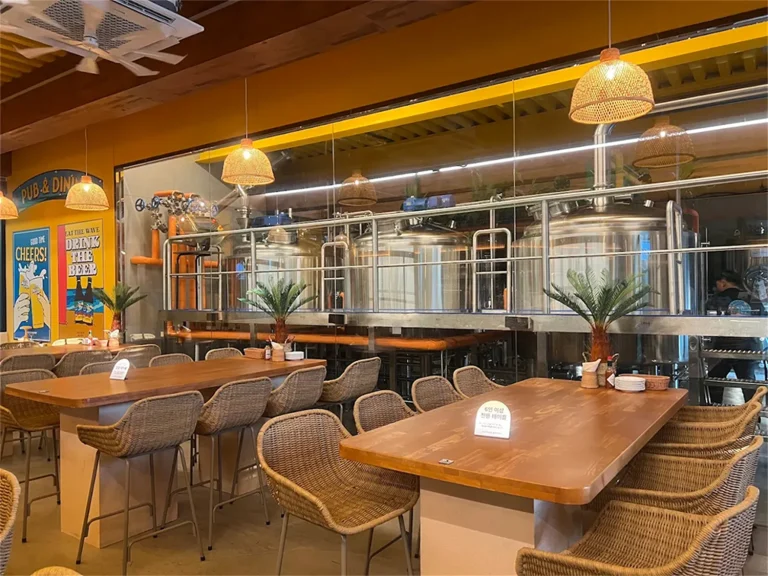
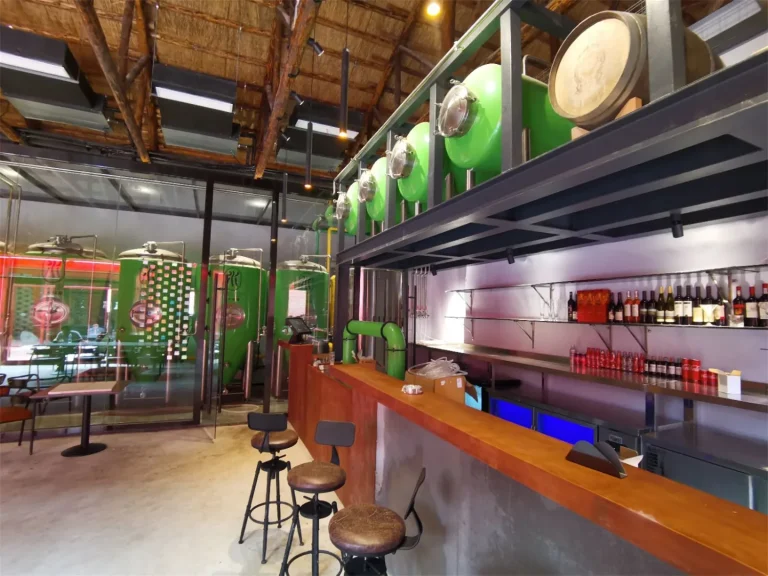
These verified METO microbrewery references use 800L and 1000L systems. They are adjacent-capacity examples for a 1500L buyer and are shown with their actual project capacities.
Answers for engineering and procurement teams evaluating a 1500L brewery equipment project.
Confirm the brewing schedule, fermentation time, packaging target, steam source, local power standard, water quality, drainage, ceiling height and available floor plan. These inputs determine cellar, cooling and utility sizing.
Model brews per week, average tank residence time, sellable yield and packaging schedule. The cellar and utilities must support the production rhythm before an annual output is confirmed.
Relevant tanks and pressure-bearing components are manufactured in food-grade SS304 or SS316 as specified, with sanitary TIG welding, controlled surface finishing, and documented inspection records. All applicable equipment undergoes documented 48-hour water and pressure testing before shipment. CE, UL, and CSA compliance documentation is available for the applicable equipment scope and destination-market requirements.
Yes. Heating, voltage, electrical brands, sanitary connections, automation and documentation can be configured for the destination market.
Yes. The design can reserve floor space, glycol headers, control capacity and process connections for additional tanks and packaging equipment.
Send your regional sales target, brews per week, fermentation plan, packaging mix, utilities and building layout. METO will prepare a 15HL production model, equipment scope, utility calculation and project quotation.
The 1500L system can be engineered with bright beer capacity, controls and utilities for future keg, bottle or can packaging.
Fill in the essentials—our team will respond with a technical proposal.
Tip: Attach layout drawings and utilities list for faster engineering confirmation.
Our team will reply using the contact details you provide. Please check your inbox and spam folder for our response.
*We respect your privacy. All information submitted is strictly confidential.
Your details will only be used to respond to your inquiry. We never send unsolicited emails or promotional messages.